
Preimplantation genetic diagnosis

What Is Preimplantation Genetic Testing?
Preimplantation Genetic Testing (PGT) combines in vitro fertilization (IVF) with preimplantation genetic testing (PGT-A) to identify specific genetic disorders or chromosomal abnormalities in embryos before they are implanted into the uterus during the treatment process.
This technology is particularly important for couples with a family history of genetic disorders, recurrent miscarriages, or previous pregnancies affected by chromosomal abnormalities. By selecting healthy embryos for transfer into the uterus, it can significantly reduce the likelihood of having a baby affected by a genetic disorder.
Preimplantation Genetic Testing goes beyond simply determining whether a disease is present. It can also provide greater peace of mind as couples prepare to become parents and help them avoid the difficult decision of terminating a pregnancy when it could otherwise have been prevented.
Candidates for Treatment
- Advanced maternal age pregnancy
- Family history of single-gene disorders
- Chromosomal abnormalities
- Recurrent miscarriages
- Recurrent implantation failure
- Sex-linked genetic disorders (hemophilia, Duchenne muscular dystrophy)
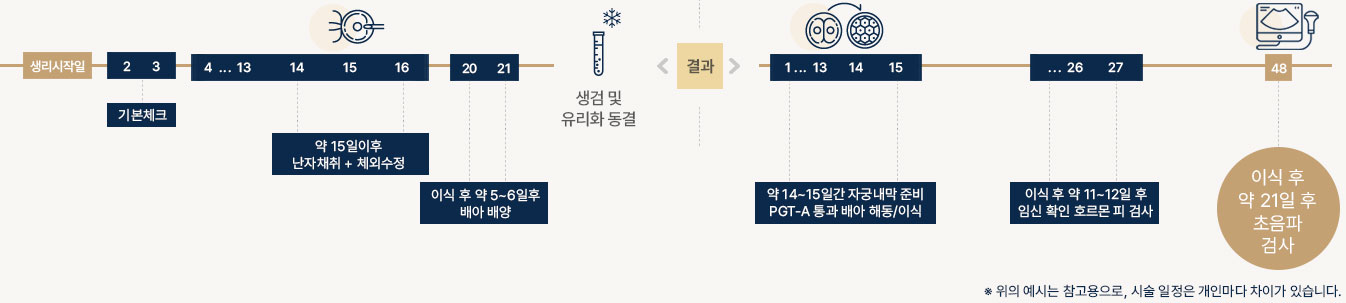
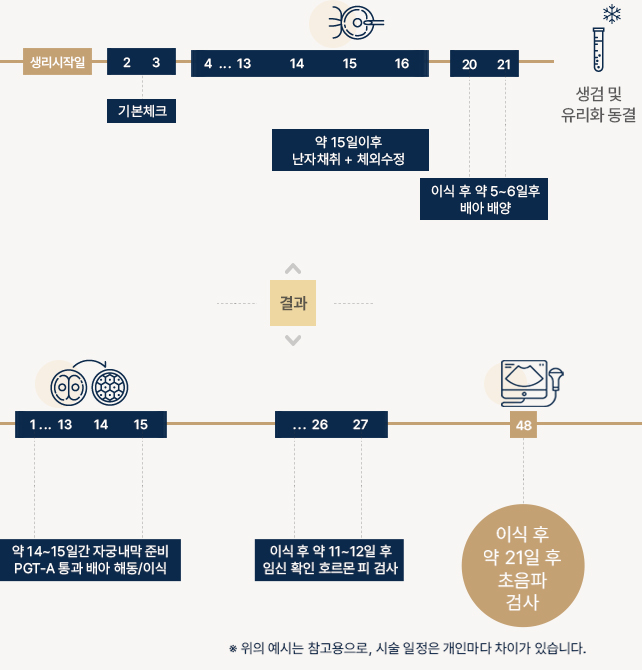
Procedure

Ovarian Stimulation, Egg Retrieval & In Vitro Fertilization
As with the standard IVF process, hormone injections are administered to stimulate the maturation of multiple eggs. The eggs are then retrieved and fertilized in vitro with the husband’s sperm.

Embryo Culture
The fertilized eggs are cultured in the laboratory for 5–6 days until they develop into the blastocyst stage. At this stage, a biopsy is performed to collect genetic material from the embryo.

Embryo Biopsy & Genetic Analysis
At the blastocyst stage, several cells, primarily trophectoderm cells, are safely collected from the embryo using micromanipulation techniques. The DNA or chromosomes of the collected cells are analyzed to determine whether specific genetic disorders or chromosomal abnormalities are present. Various analytical methods are applied depending on the specific genetic disorder or abnormality being tested.

Selection & Cryopreservation of Healthy Embryos
Based on the results of genetic analysis, healthy embryos with normal genetic profiles are selected and cryopreserved.

Embryo Transfer & Pregnancy Confirmation
Once the woman’s endometrium has been optimally prepared, one or two of the cryopreserved healthy embryos are transferred into the uterus. Approximately two weeks after embryo transfer, a blood test is performed to confirm whether pregnancy has occurred.