
IVF procedure
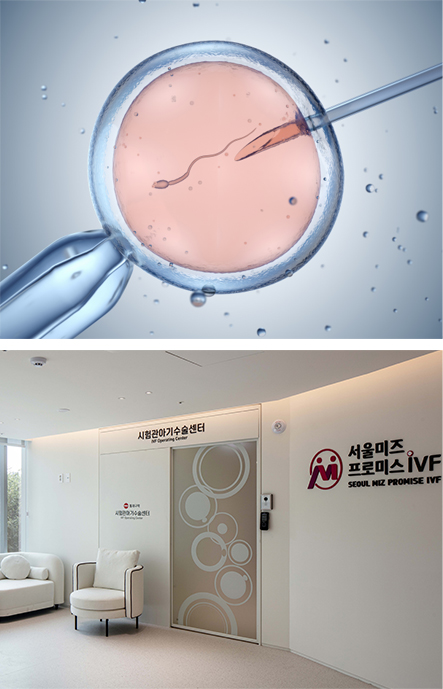
What Is In Vitro Fertilization (IVF)?
IVF refers to the process in which sperm and eggs meet and fertilization takes place outside the body. Medically, this is known as In Vitro Fertilization (IVF). The procedure consists of several steps.
First, mature eggs are retrieved from the woman’s ovaries.
Next, sperm are separated and prepared from the man’s semen.
The eggs and sperm are then combined in the laboratory to achieve fertilization.
The fertilized eggs are cultured for 3–6 days, during which they develop and grow into embryos.
Finally, the developed embryo is transferred into the uterus to achieve pregnancy.
IVF is a method of infertility treatment that may require multiple attempts depending on the individual circumstances, and the success rate may vary according to each patient’s health and medical condition.
Candidates for Treatment
- Bilateral tubal blockage or previous surgical removal of both fallopian tubes
- Poor fallopian tube condition requiring tubal reconstructive surgery, followed by failure to conceive naturally for 6 months to 1 year or longer
- Diminished Ovarian Reserve
- Ovulatory Disorders
- Male Factors
- Endometriosis
- Multiple unsuccessful IUI attempts
- Cases requiring Preimplantation Genetic Testing (PGT)
- Unexplained infertility where pregnancy has not been achieved through other treatment methods
- Egg freezing for fertility preservation
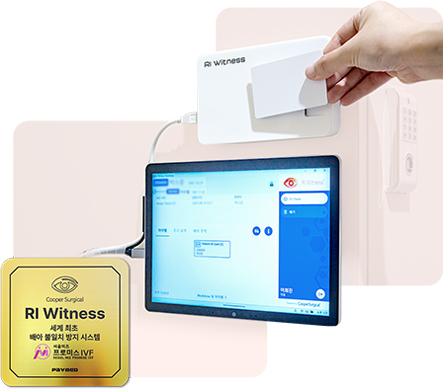
Embryo Misidentification Prevention System
If the information of an embryo or reproductive cell does not match during the treatment process, the procedure cannot proceed. To prevent embryos or reproductive cells from being mixed up, we have implemented and operate the RI Witness System, an advanced embryo misidentification prevention system.
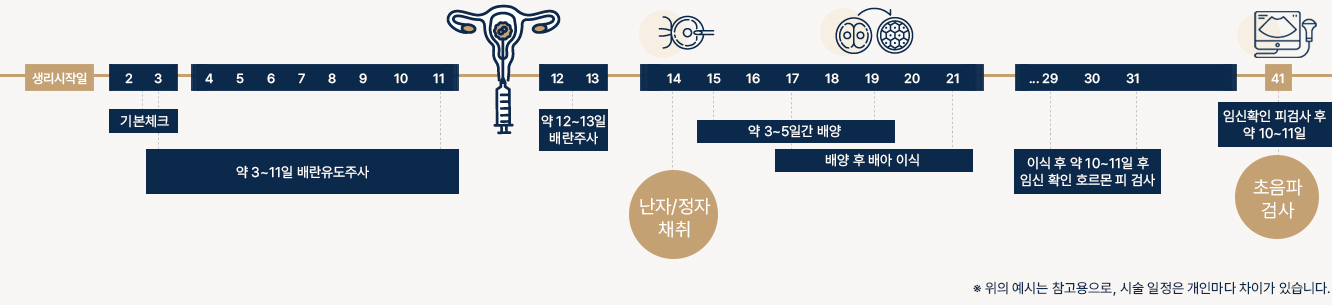
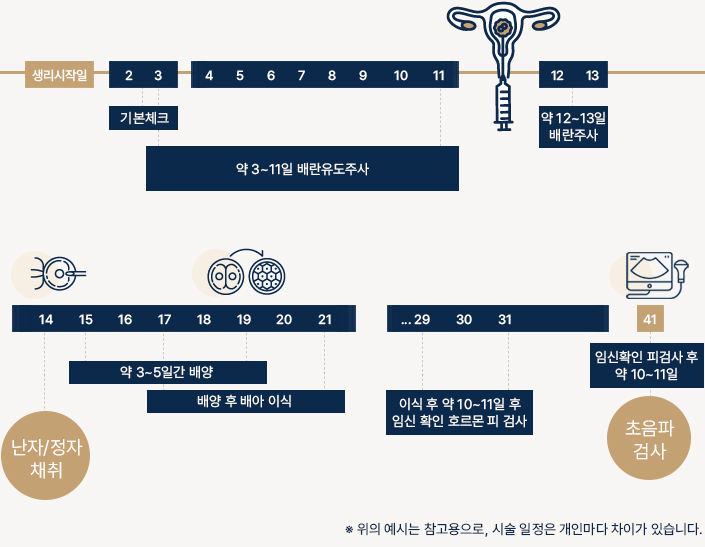
Procedure

Ovulation Induction
In a normal menstrual cycle, only one egg typically matures and is ovulated. However, during in vitro fertilization (IVF), it is important to obtain multiple healthy eggs. To achieve this, ovulation induction injections are administered from the 2nd–3rd day of menstruation to stimulate ovarian function and promote the growth of multiple follicles.

Ovulation Monitoring & Egg Retrieval
During the ovulation induction process, several blood tests and ultrasound examinations are performed. Once sufficient follicular development is confirmed, an hCG injection is administered to promote final egg maturation and ovulation. Egg retrieval is then performed approximately 35 hours after the injection. While monitoring the ovaries and follicles using transvaginal ultrasound, a thin needle is used to aspirate and retrieve the eggs from each follicle. This procedure is generally performed under sedation, so patients experience little to no pain.

Fertilization & Embryo Culture
On the day of the procedure, the husband should visit the clinic together with his spouse and provide a semen sample after egg retrieval has been completed. The processed, healthy, selected sperm are combined with the eggs to facilitate fertilization. There are two methods of fertilization: Conventional In Vitro Fertilization (Conventional IVF) and Intracytoplasmic Sperm Injection (ICSI). Conventional IVF is a method in which sperm and eggs are placed together in a laboratory setting and allowed to fertilize naturally. After fertilization, the resulting embryos are cultured in an optimal environment for 3–6 days. During this period, the embryos are carefully monitored, and the best-quality embryos are selected based on the observed data.

Embryo Transfer
Once the endometrium is adequately prepared for transfer, the best-quality selected embryo is transferred into the woman’s uterus using a thin tube (catheter). The embryo transfer procedure is relatively simple and is performed without anesthesia, as it causes little to no pain. The number of embryos to be transferred is determined based on factors such as the patient’s age, previous treatment history, and embryo quality.

Pregnancy Confirmation
Pregnancy is confirmed through a blood test approximately 11–12 days after embryo transfer. Once pregnancy is confirmed through several additional blood tests, an ultrasound is performed 1–2 weeks later to check for the gestational sac. Even after pregnancy is confirmed, continued monitoring and care are necessary.

Cryopreservation of Remaining Embryos
High-quality embryos remaining after embryo transfer, or embryos that are not transferred for various reasons, are cryopreserved through a vitrification process for future use.