
Female Fertility Testing in Korea

The Importance of Fertility Evaluation
Starting a family is a great joy and hope for many couples. However, when pregnancy does not come as expected, couples can feel confused and overwhelmed. The first step toward overcoming these difficulties and planning a healthy pregnancy is undergoing a fertility examination.
Infertility refers to the condition in which pregnancy does not occur despite having regular unprotected intercourse for more than one year. In the past, there was a tendency to attribute the cause solely to women, but according to recent research findings, male factors account for approximately 40% of infertility cases — a significant proportion. Therefore, infertility testing is necessary for both partners, and it is an essential process for accurately identifying the cause and establishing a customized treatment plan.
How Is Female Fertility Testing Done?
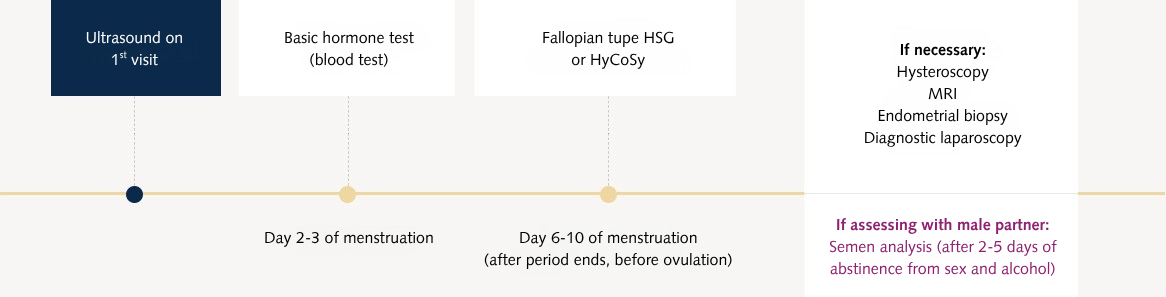
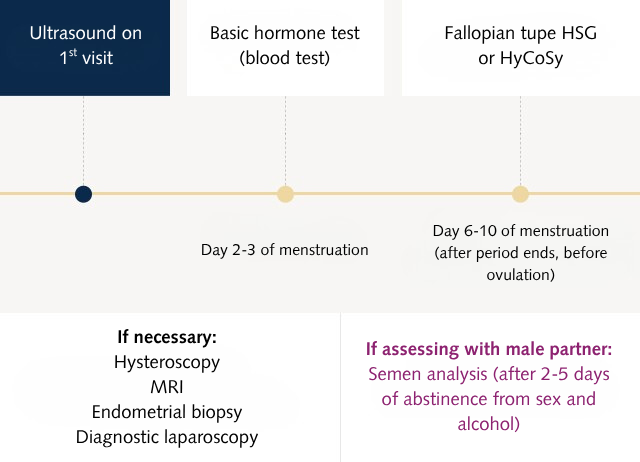
Tests Performed to Evaluate Female Fertility
1 Female Hormone Test
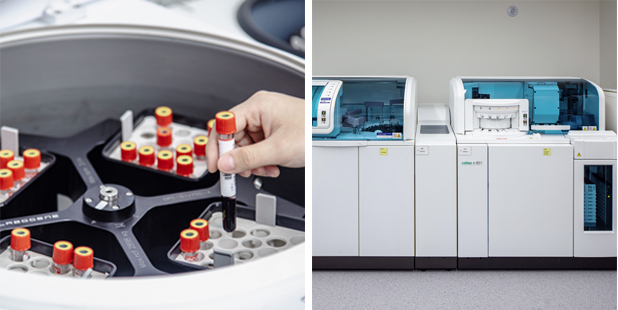
A blood test is conducted on days 2–3 of the menstrual cycle to assess ovarian function and the hormonal status related to ovulation. At this time, female hormone levels such as Follicle-Stimulating Hormone (FSH), Luteinizing Hormone (LH), and Estradiol (E2) are measured to evaluate ovarian function. In addition, other hormone levels that may affect pregnancy — such as Thyroid-Stimulating Hormone (TSH) and Prolactin — are also checked. As we are equipped with the latest instruments and conduct hormone testing in-house, results are available quickly and on the same day.
2 Pelvic Ultrasound (Uterus & Ovaries)
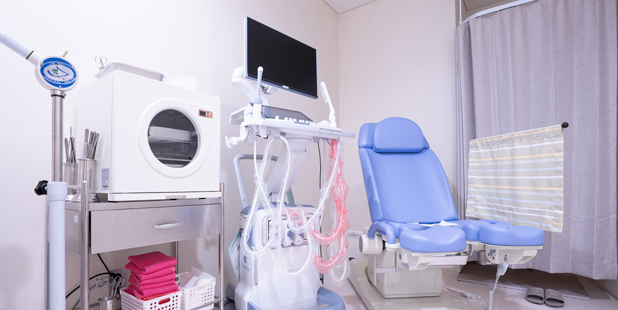
A pelvic ultrasound is performed to check for structural abnormalities in the uterus and ovaries. Through this examination, abnormal findings that may affect implantation — such as uterine fibroids, endometrial polyps, and ovarian cysts — can be identified. The uterine ultrasound is generally conducted on days 2–3 of the menstrual cycle, allowing assessment of the condition of the ovaries and uterus to evaluate the likelihood of pregnancy. Some clinics also perform HyCoSy (Hysterosalpingo-Contrast Sonography) using ultrasound instead of conventional HSG.
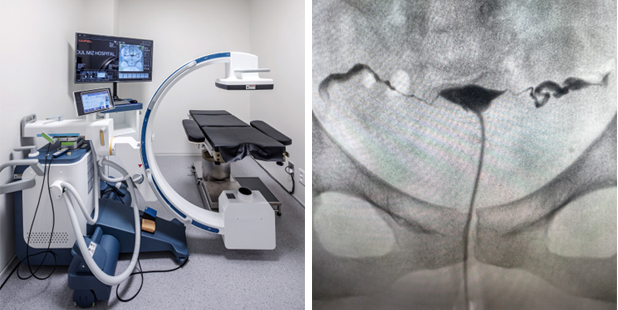
3 Fallopian Tube Contrast Ultrasound (HyCoSy)
At our clinic, two options are available: Hysterosalpingography (HSG), which is eligible for insurance coverage and has a relatively lower out-of-pocket cost, and HyCoSy (Hysterosalpingo-Contrast Sonography), which carries no risk of radiation exposure and causes less pain. Through these examinations, not only fallopian tube blockage but also hydrosalpinx, uterine malformations, and intrauterine abnormalities can be diagnosed. The examination is typically performed between the end of menstruation and before ovulation, generally between days 6–11 of the menstrual cycle. If the fallopian tubes are blocked, it can be confirmed that the contrast medium is unable to flow out.
Begin Your Journey With Us
Fill in our consultation form to begin your treatment journey with us. Let us know your information and concerns, and a member of staff will respond as soon as possible to begin your free online consultation process.
Frequently Asked Questions
When should I consider fertility testing?
You may want to consider fertility testing if pregnancy has not occurred after more than one year of regular, unprotected intercourse. Testing can help identify possible causes and support a personalized treatment plan.
Should both partners have infertility testing?
Yes. Fertility testing is recommended for both partners because male factors account for approximately 40% of infertility cases.
What happens during a female hormone test?
A blood test is performed on days 2–3 of your menstrual cycle to assess ovarian function and hormones related to ovulation. It measures FSH, LH, and estradiol (E2), along with hormones that can affect pregnancy, including TSH and prolactin.
How soon can I receive hormone test results?
Because hormone testing is performed in-house with current instruments, results are available quickly and on the same day.
What can a pelvic ultrasound check for?
A pelvic ultrasound checks the uterus and ovaries for structural concerns that may affect implantation, including uterine fibroids, endometrial polyps, and ovarian cysts.
When is a pelvic ultrasound usually performed?
A uterine and ovarian ultrasound is generally performed on days 2–3 of your menstrual cycle to assess the condition of the uterus and ovaries and evaluate the likelihood of pregnancy.
What are the options for checking my fallopian tubes?
You can choose between hysterosalpingography (HSG), which may be covered by insurance and generally has a lower out-of-pocket cost, and HyCoSy, a contrast ultrasound that does not involve radiation exposure and causes less pain.
What can an HSG or HyCoSy detect?
These examinations can identify fallopian-tube blockage, hydrosalpinx, uterine malformations, and abnormalities inside the uterus.
When is fallopian tube testing usually scheduled?
Fallopian tube testing is typically done after menstruation ends and before ovulation, generally between days 6–11 of your menstrual cycle.