
IVF and Fertility Treatment in Korea
Prenatal Genetic Testing in Korea

What Are Preconception & Prenatal Genetic Tests?
Based on cutting-edge technology and extensive experience, we provide accurate and reliable prenatal genetic testing services.
Our experienced specialists and genetic counseling professionals address prospective parents’ questions and provide kind, thorough guidance throughout the entire testing process.
We offer a variety of prenatal genetic testing programs and provide personalized testing tailored to each individual’s circumstances and needs. We also provide clear and accurate explanations of test results and, when necessary, professional genetic counseling to help prospective parents fully understand the results and make informed, reasonable decisions.
The journey toward welcoming a precious new life is filled with excitement and anticipation. As prospective parents prepare for this special time, prenatal genetic testing is an important option that can help assess the baby’s health in advance and prepare for potential risks. Seoul Miz Promise IVF supports prospective parents in achieving a healthy pregnancy and childbirth.
Take the first step toward a healthy future for your precious baby with Seoul Miz Promise IVF.
Prenatal Screening Options
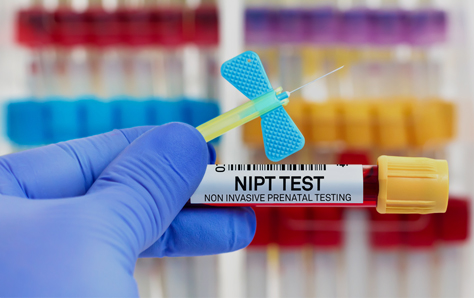
Non-Invasive Prenatal Testing (NIPT) in Early Pregnancy
Non-Invasive Prenatal Testing (NIPT) is a screening test performed from 10 weeks of pregnancy onward that analyzes fetal DNA from the mother’s blood to assess for chromosomal abnormalities. Compared with conventional serum screening tests, NIPT offers significantly higher accuracy and can screen for chromosomal abnormalities such as Down syndrome, Edwards syndrome, and Patau syndrome with a high degree of reliability. It can also determine the baby’s sex. As NIPT is a safe, non-invasive test that poses no direct risk to the mother or fetus, it is increasingly chosen by many prospective parents.

Multiple Marker Screening in the Second Trimester
Multiple Marker Screening is a non-invasive screening test performed between 15 and 20 weeks of pregnancy. It combines a maternal blood test with an ultrasound examination to assess the risk of fetal chromosomal abnormalities and neural tube defects. This includes screening methods such as the Triple Test and Quad Screen. Although its accuracy is lower than that of NIPT, it has the advantage of being relatively simple to perform. If the screening results indicate a high-risk finding, additional diagnostic testing may be required for confirmation.

Invasive Prenatal Diagnosis
Invasive prenatal diagnosis involves directly collecting fetal cells through amniocentesis or chorionic villus sampling (CVS) to accurately diagnose chromosomal and genetic abnormalities. Amniocentesis involves collecting amniotic fluid between 15 and 20 weeks of pregnancy and analyzing fetal cells. Chorionic villus sampling (CVS) involves collecting chorionic villi, a part of the placenta, between 10 and 13 weeks of pregnancy for testing. Although invasive testing offers a very high level of accuracy, rare complications such as miscarriage or infection may occur during the procedure. Therefore, the decision should be made carefully after thorough consultation with a specialist. These tests are primarily performed when a non-invasive screening test indicates a high-risk result or when there is an increased risk of a specific genetic disorder.
Begin Your Journey With Us
Fill in our consultation form to begin your treatment journey with us. Let us know your information and concerns, and a member of staff will respond as soon as possible to begin your free online consultation process.
Frequently Asked Questions
What are preconception and prenatal genetic tests?
These tests help prospective parents assess a baby’s health in advance and prepare for potential risks. Testing can be tailored to individual circumstances and needs, with clear result explanations and genetic counseling when needed.
What is NIPT, and when can I have it?
Non-Invasive Prenatal Testing (NIPT) is a blood-based screening test available from 10 weeks of pregnancy. It analyzes fetal DNA from the mother’s blood to assess the likelihood of chromosomal abnormalities.
What can NIPT screen for?
NIPT can screen for chromosomal abnormalities including Down syndrome, Edwards syndrome, and Patau syndrome. It can also determine the baby’s sex.
Is NIPT safe for me and my baby?
Yes. NIPT is non-invasive and poses no direct risk to either the mother or the fetus.
What is multiple marker screening?
Multiple marker screening is a non-invasive test performed between 15 and 20 weeks of pregnancy. It combines a maternal blood test and an ultrasound examination to assess the risk of chromosomal abnormalities and neural tube defects.
What types of tests are included in multiple marker screening?
Multiple marker screening includes methods such as the Triple Test and Quad Screen.
What happens if my multiple marker screening result is high risk?
A high-risk screening result may mean that additional diagnostic testing is needed to confirm the finding.
What is invasive prenatal diagnosis?
Invasive prenatal diagnosis collects fetal cells through amniocentesis or chorionic villus sampling (CVS) to diagnose chromosomal and genetic abnormalities with a very high level of accuracy.
When are amniocentesis and CVS performed?
Amniocentesis is performed between 15 and 20 weeks of pregnancy and uses amniotic fluid for fetal-cell analysis. CVS is performed between 10 and 13 weeks and tests chorionic villi, which are part of the placenta.
Are there risks with invasive prenatal testing?
Although these tests are highly accurate, rare complications such as miscarriage or infection can occur. A careful decision should be made after a thorough consultation with a specialist.
When might invasive prenatal diagnosis be recommended?
It is primarily considered when a non-invasive screening test shows a high-risk result or when there is an increased risk of a specific genetic disorder.